What Google’s Paid Search Changes Mean For You

On February 22nd, Google officially eliminated paid search results from displaying on the right hand side of the search engine result page (SERP) on desktop. It’s a big change, so we’ve dug in to let you know exactly what’s happened and how it may affect you as an internet user or marketer.
What Happened
Before, just 1-3 ad blocks displayed “above the fold,” or above organic results before scrolling, like in this example (look for the yellow “Ad” badge):
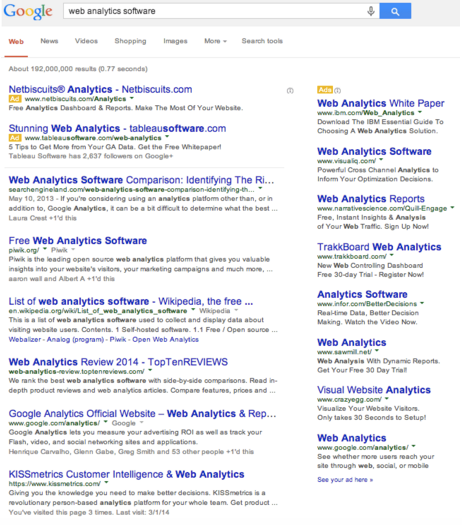
Now with the new updates, ads takeover above the fold, with more organic results displaying below the fold—and no ads in the right rail—as shown in this example:
.webp)
This shift has resulted in an overall drop in the total number of ad positions, since the right hand side used to contain up to eight ads, allowing for around 11 ads in total per page. According to Moz, this caused a 41.1% drop in Google AdWords ad positions in the first week.
How it affects users
Some of the initial articles discussing the change have suggested that users will now be driven to surpass the first page of SERP results, similar to the YouTube ad roll. But why would we assume users would automatically change their behavior and start jumping deeper into search results, given that they’ve become accustomed to believing they’ll find the most relevant results on the first page? Instead, it seems more likely that an increase in ads above the fold could increase the chances of ad blocking (food for thought!).
For now, what we can say about this change is that it provide users a cleaner, less cluttered layout, potentially delivering a better user experience.
How it affects marketers
This change arguably affects advertisers the most. Why? It calls on advertisers to create richer, more relevant search ads, reinforcing the call for advertisers to do a better job of following Google’s best practices.
So how can you adjust?
- Act quickly. This change slightly blurs the difference between ads and organic listings, which might lead to an increase of ad clicks on highly qualified ads.
- Step up your SEO game. If you haven’t yet optimized your site content for search, start now. Why? With more organic possibilities now on the first page, your brand has an increased opportunity to increase organic ranking. And with the rise in ad blocking, it’s crucial to ensure that you’re not relying on paid search only to get your content in front of users.
- Aim high in your ad position. There may be a big drop off after ad position 3, so keep this in mind when creating and implementing your bidding strategy. Consider using “bid to position” rules to ensure ads are showing in top placements.
- Use several ad extensions. All ads can now use the several ad extensions, which were previously only available for the top-of-page ads in positions 1-3. Take advantage of these extensions (i.e. sitelinks, call, location, review) to get the most clicks out of each of your ads.
It’s still early in the game, but we’ll be watching to see how this new Google change will affect paid search in the coming months, especially on mobile. So check back later for an update, and don’t hesitate to get in touch with us if you have any specific questions in the meantime.