GEO Doesn’t Have to Be Hard

AI has quickly become a new layer in how people search, discover, and make decisions. For marketers, that shift feels exciting, but also overwhelming. It can seem like there’s suddenly another system to figure out, another algorithm to keep up with, and another way your content needs to perform.
This moment feels a lot like the early days of SEO in the 2000s. The algorithm was new, the rules weren’t clear, and companies kept their cards close to the vest. People were experimenting, running studies and trying to reverse-engineer what worked.
Today, SEO feels far more understood. The algorithms still evolve, but the chaos is gone.
The pattern back then was:
- Phase 1: Freak Out
- Phase 2: Figure it Out (and implement a strategy)
- Phase 3: Profit (hopefully)
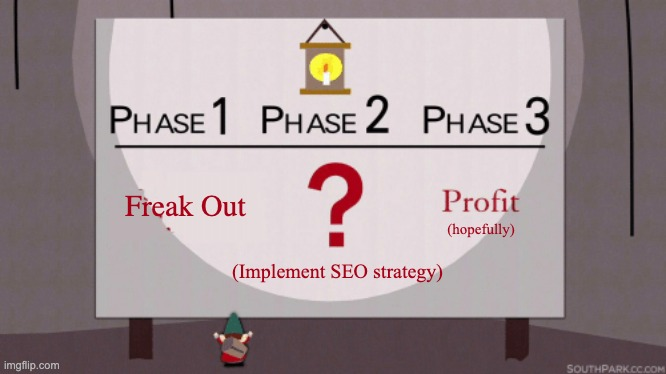
Right now with GEO, most teams are still stuck in Phase 1, trying to make sense of what this even is. Just like with SEO, the hardest part is moving from Phase 1 to Phase 2. Information is fragmented, incomplete and constantly changing. At Hanson, we’ve been helping clients take a more measured approach, moving past the initial shock and treating GEO (or AEO, or AI search, or whatever we end up calling it) as something you can actually plan for.
Good SEO is Always Good GEO
At its core, this is not a completely new game. The same keywords and topics you have been targeting for SEO are the same things people are asking about in ChatGPT, Claude, Gemini, Copilot, and even tools like Grok. The difference is that people are asking in more complete thoughts, with more context, and expecting more direct answers.
That means your content needs to go a lot deeper.
Doing this well within your page layout is the challenge. You need enough depth and context for bots, while still maintaining a strong experience for actual humans. You want to be included in the AI response as a way to drive someone back to your site, so the human experience still matters.
Adding context, expanding on ideas and including FAQ-style content creates more opportunities to match how people are actually asking questions. What used to feel like extra content is now what helps you get picked up.
If you are already doing good content SEO, then you are not starting from scratch. You are simply building on top of something that already works.
Nail the Technical SEO
This has always mattered, and now it just matters more. If your site is not crawlable, not indexable, or not structured in a way that bots can understand, nothing else you do is going to show up.
Things like metadata, heading structure, broken links, schema markup, hierarchy, URL structures, and redirect strategies all make it easier for bots to understand what is going on. Use the tools meant for this, whether that is Siteimprove, SEMrush, Ahrefs, or one of the many other good options out there, and scan your site to make sure everything is in a good place. The easier it is for a bot to process your page, the more likely it is to use it. And while you’re at it, fix your accessibility, as good WCAG adherence is key to good SEO.
The reality is… this is not new work. It is the same technical foundation we have always needed, just with more importance behind it.
Control Your Missed Mentions
What used to be “keywords you’re not ranking for” are now better thought of as missed mentions: places where your brand or content should be part of the answer, but isn’t.
The difference is that AI isn’t just listing links—it’s building answers. You don’t have to be ranked #1; you just have to be included. Tools like SEMrush can now help surface where you’re not being mentioned, giving you a clear place to start.
That means finding those gaps and filling them with content that directly answers the questions people are asking. This is still the same idea as keyword research, just with a different lens. You are looking for what people are asking, figuring out where you are missing, and then adding that content so you can be part of the answer.
Be Authoritative (it’s still E-E-A-T)
Early AI had the issue of “hallucinating” and just making things up, which for most people is worse than not getting an answer at all. Because of that, the platforms continue to turn the dials toward authoritative, well-cited sources.
Content that directly addresses a user’s specific ask and backs it up with credible sources is what gets used. Numbers, stats and ideas pulled from other sources should be cited and linked. Backlinks have always mattered for search engines, but they matter even more now when being right is critical to being included in an answer.
There are a million stats out there that show how much AI is improving conversion rates because people are more qualified when they land. Ahrefs says only 0.5% of traffic is from AI search (well-cited source: someone with a chart 📊), Webflow is seeing AI drive ~8% of signups (rock-solid citation: random blog article 😉), and there are studies floating around showing that even though the traffic is small, it can have up to 23x higher conversion rates (credible reference: the internet 🌐). Take the numbers with a grain of salt, but the direction is clear.
But it also just logically makes sense. If I ask a more complete question and get a more complete answer, the click through is going to be more qualified. I am not clicking 3-5 results and bouncing around anymore. I am just going straight to the best source.
This is also where overly flowery marketing language starts to hurt you. If your content is vague, full of buzzwords, or trying too hard to sell instead of answer, it becomes harder for these systems to confidently use it. These AI systems are answer-driven. They want a direct and correct answer, so make it easy for them to choose you. Clear, direct and factual content wins every time.
We’re Here to Help
If this still feels like a lot, that is normal. Every shift in digital has followed this same pattern. It feels big at first, then it becomes something we understand and work through.
GEO is not a complete reset. It is an extension of what already works, with a few areas that matter more than they used to.
If you are trying to figure out where to start or how to adjust what you are already doing, we can help you make sense of it and build a plan that actually works.
Unsure how AI search affects your site?
Don’t worry! Our team knows how to talk to robots. Well, not really. But we do know how to get your results to show up in AI Searches.