Behind the Magic of Live Events
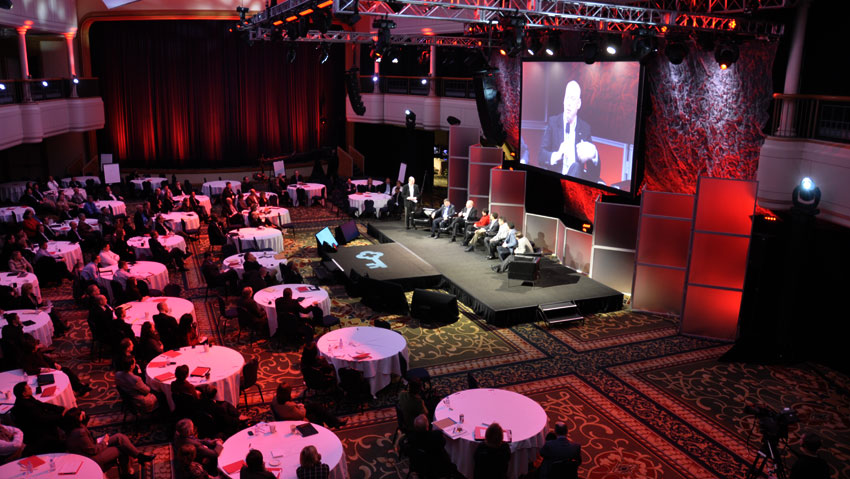
The house lights dim. The crowd hushes. Music swells from an unseen source as the curtains part to reveal an actress, in a trio of spotlights, swooping down from the stars.
You feel the goosebumps rise and wonder: how do they do that?
We’re used to special effects in movies. CGI, green screens, multiple takes. But in live productions, when the lighting and the sound and the movement on stage come together perfectly, it can seem like magic.
That heightened emotion and sense of wonder is what we strive to achieve with every live event we produce. In a given year, Hanson’s event management and marketing team manages charity galas, corporate meetings, conferences and university commencements. Though they may not have the classic drama of Peter Pan, each one is an occasion orchestrated to tell a story: a community group making a difference, a corporate team achieving a sales goal, a graduating class launching exciting careers.
The details differ from event to event, but our approach boils down to one principle.
Treat live events as business theater.
In other words, regardless of the specifics of an event, the people have come to see a show—and we want them to get their money's worth. That means it starts and ends on time, with a flawless execution and a touch of glamour. It's all about delivering a great experience.
And like any great theater production, most of the work happens behind the scenes.
An invisible team of audio, lighting, video, and projection technicians, under the direction of a production specialist, is weaving magic. The production specialist is the master magician, calling the stage cues, keeping the emcee on script, making sure images hit the screen on time and audio comes in at the perfect decibel.
We’ve all been to events without an experienced technical crew. It was obvious from the screeching feedback loop, the duct taped cords in the aisle, the awkward delay between slides on the screen. It’s annoying, and it detracts from the message everyone is there to hear.
In contrast, it’s what you don’t notice at a live event that might tip you off about the backstage professionalism. You’re making an emotional connection with the story being told because the crew has anticipated every detail.
From the room layout and temperature to the sound and lighting, from the session schedule to the script, video playback and slides, it’s a magic made of technical expertise, careful planning and the intuitive reflexes to react quickly to last minute changes.
When we’ve done our jobs well, event attendees are taking the wizard’s advice to “pay no attention to the man behind the curtain.” They’re simply enjoying the show – and that’s the best compliment we can receive.
Learn more about Hanson's Event Management & Marketing services.